
How Many Solar Panels Does an Average Home
Need?
How Many Solar Panels Does an Average Home Need?
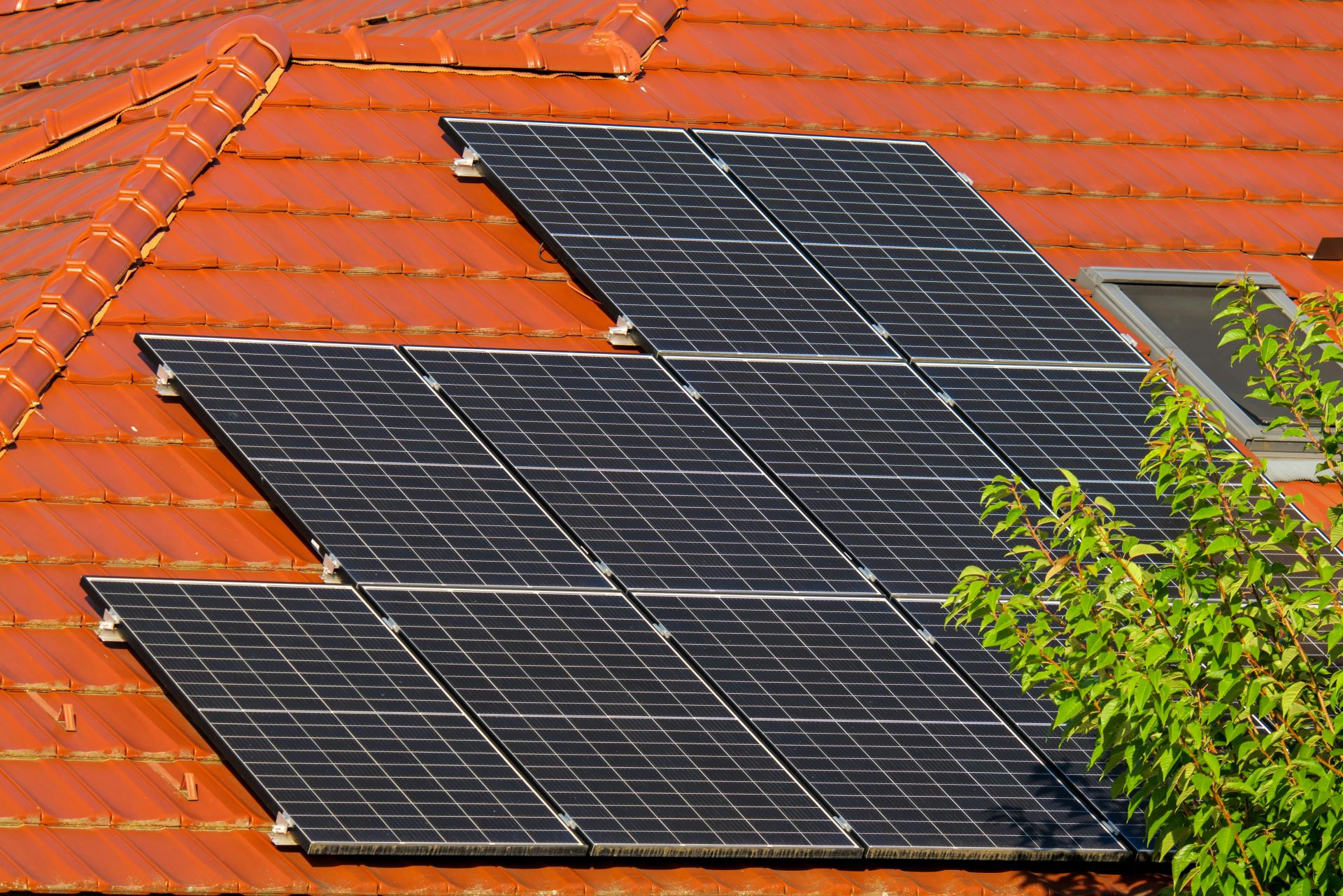
The question of how many solar panels are needed for an average house does not have a universal answer. It is a practical puzzle rather than a fixed equation. The number depends on lifestyle habits, home size, appliance use, and the level of independence from grid electricity that the homeowner wants to achieve.
In South Africa, where electricity supply stability has become a growing concern due to pressure on the national grid managed by Eskom, many households are exploring solar energy as a long-term investment rather than a short-term convenience. Some homeowners want partial backup during outages, while others are aiming for near-complete energy autonomy.
The average household does not actually need an “average number” of panels. Instead, what matters is daily consumption patterns and the expected output of each installed panel under local sunlight conditions. South Africa enjoys generous solar irradiation across most regions, especially inland areas such as Johannesburg, which makes solar systems highly efficient compared to many global locations.
Understanding Household Electricity Consumption First
Before calculating panel quantity, homeowners must understand how much electricity their lifestyle consumes. Solar systems are not sized by the number of bedrooms in a house but by kilowatt-hours used per day.
A small urban apartment with efficient appliances might use between 8 kWh and 15 kWh daily. A medium suburban family home can range between 20 kWh and 35 kWh per day depending on cooking methods, water heating, entertainment devices, and climate control systems.
Large homes with swimming pool pumps, air conditioning units, and extensive lighting networks can exceed 50 kWh per day without difficulty.
To estimate consumption, check your electricity bill’s monthly kWh usage and divide it by 30 to obtain a rough daily average.
Lifestyle matters deeply here. A household that uses electric geysers for hot water will consume far more energy than one using solar water heating or gas-assisted heating solutions. Similarly, constant use of high-power appliances like tumble dryers or electric ovens will increase panel requirements.
Think of electricity consumption as the shadow your lifestyle casts on the sun. The busier your home’s energy appetite, the larger the solar canopy you must build above it.
How Much Power Does One Solar Panel Produce in South Africa?
Solar panel output depends on panel efficiency, installation angle, temperature, and sunlight hours.
In South African conditions, a standard 550W to 600W solar panel may realistically produce around 2.5 kWh to 3 kWh per day under optimal orientation and minimal shading.
This figure assumes that panels are correctly tilted toward the northern sky because South Africa lies in the southern hemisphere, where north-facing panels capture the most sunlight during the day.
Weather patterns also influence production. Winter days are shorter and may produce slightly lower yield, while summer sunlight is more generous but can sometimes be softened by cloud cover.
For rough planning purposes, many installers use 2.8 kWh per panel per day as a working average.
Rough Estimation Logic for Panel Quantity
The simplest estimation logic follows this structure:
Daily household consumption ÷ Daily output per panel = Number of panels required
For example:
If a home uses 30 kWh per day
And each panel produces roughly 2.8 kWh daily
Then the house would need approximately 11 solar panels.
This is not an engineering calculation. It is a lifestyle approximation meant to guide early planning conversations with installers.
Homeowners should also consider future electricity behaviour. Installing slightly more capacity than current usage allows space for lifestyle expansion, such as working from home or adding electric vehicle charging later.
Typical Panel Counts for Different Household Sizes
While every home is unique, general patterns can help with preliminary budgeting.
• A small household using around 15 kWh per day may need roughly 5 to 7 panels. • A medium family home consuming 25 kWh to 35 kWh daily may require about 9 to 13 panels. • Larger homes using 50 kWh or more per day may need 18 panels or higher depending on backup goals.
These ranges assume modern high-efficiency panels installed under South African sunlight conditions.
Remember that solar systems are not built only for comfort but also for resilience. During load shedding periods experienced across the country, many homeowners design systems to maintain essential services such as refrigeration, lighting, and communication.
Battery Storage Changes the Calculation
Adding battery storage transforms how panel numbers are determined.
If the goal is simply daytime consumption, fewer panels may be sufficient because excess energy is not stored. However, if the homeowner wants nighttime backup capability, more panels are required to charge batteries during daylight hours.
Battery systems act like energy reservoirs holding sunlight like bottled summer. Without sufficient panel capacity, batteries will charge slowly, especially during winter when solar yield decreases.
For example, a home wanting to store 10 kWh of usable energy overnight should ideally have enough panel capacity to generate at least 14 kWh during the day to account for charging inefficiencies.
In South African contexts where grid reliability is unpredictable, many households design hybrid systems that combine solar generation with limited grid dependency.
##The Role of Roof Space and Building Structure
Solar panel planning is not only about energy mathematics but also about physical architecture.
Roof orientation is critical. North-facing roofs in the southern hemisphere capture sunlight most effectively throughout the year. East-west roof layouts can still work but may slightly reduce peak efficiency.
Structural integrity also matters. Older roofs may require reinforcement before installing mounting frames and panels.
For homeowners maintaining property value, solar installation is often treated as part of long-term building maintenance rather than a separate electrical upgrade.
When planning installations, consider shading from nearby trees, boundary walls, or multi-storey structures. Even partial shading on one panel can reduce overall system performance because solar arrays usually operate in series circuits.
Lifestyle Factors That Push Panel Requirements Higher
Certain household behaviours quietly inflate solar demand.
Air conditioning is one of the biggest contributors. Cooling systems can consume several kilowatt-hours per hour when running continuously during summer heat.
Swimming pool pumps are another significant energy load. These pumps often run for long periods and can unexpectedly double baseline consumption if not carefully managed.
Electric cooking appliances, water heating systems, entertainment setups, and home office equipment also influence energy appetite.
Homeowners sometimes underestimate standby power consumption. Devices left plugged in but not actively used still draw small amounts of electricity, a phenomenon sometimes called vampire load.
Over a month, these invisible energy leaks can become surprisingly hungry ghosts feeding on the grid.
How Climate Influences Installation Size in South Africa
Solar efficiency is closely linked to regional climate conditions.
In coastal regions, humidity and cloud movement may slightly reduce peak production. Inland regions, particularly high-altitude urban zones, generally enjoy stronger solar intensity.
South African climate diversity means that system design should be locally tuned rather than copied from international guidelines.
Installers often perform site-specific irradiation assessments before finalising panel counts.
Future-Proofing Your Solar Investment
Many homeowners prefer installing a system that exceeds current consumption by about 20%.
This buffer serves three purposes.
It accommodates lifestyle growth without immediate upgrades.
It protects against seasonal production variation.
It provides resilience during extended grid interruptions.
Solar infrastructure should be viewed as a long-term building utility, similar to water piping or electrical wiring, rather than a consumable appliance.
Maintenance also plays a role in future performance. Dust accumulation, particularly in dry inland areas, can gradually reduce panel efficiency. Regular cleaning and inspection keep the system breathing sunlight like a patient mechanical sunflower.
Cost Considerations and Value Perspective
The number of panels directly influences installation cost, but homeowners should evaluate solar systems based on lifetime value rather than upfront expenditure.
In regions served by Johannesburg, electricity price escalation has historically made solar adoption financially attractive over long periods.
While the initial installation may seem substantial, reduced dependency on the grid and protection against tariff increases can offset costs over several years.
##Working With Installers and Avoiding Oversizing Errors
Oversizing a solar system can be as inefficient as undersizing it. Excess capacity without battery storage may result in wasted generation during periods when household demand is low.
Professional installers usually begin with an energy audit, reviewing past electricity bills and appliance specifications.
Homeowners should be cautious of simple “panel per room” marketing claims, which are not scientifically reliable.
The best approach is a lifestyle-based calculation supported by technical assessment.
Determining how many solar panels an average house needs is not about chasing a universal number. It is about aligning sunlight harvesting with human behaviour inside the home.
In South Africa, where electricity reliability has become a planning concern for many families, solar installations represent both environmental adaptation and practical energy security.
Start with daily consumption, estimate panel output under local sunlight, and add a small future-proofing margin. Think of solar panels as patient companions standing on your roof, quietly translating daylight into domestic comfort.
With thoughtful design and maintenance, a solar system becomes a living layer of the home, supporting modern lifestyles while reducing dependence on an uncertain grid.