
Solar Panel Mounting Systems for South African
Homes
Solar Panel Mounting Systems
Solar panels are the most visible part of any photovoltaic installation, but the structure that holds them in place is just as important. Mounting systems ensure that panels remain stable, correctly oriented and able to withstand environmental forces such as wind, rain and temperature changes.
In South Africa, where solar installations have increased dramatically due to electricity supply challenges and rising energy costs, mounting systems have become a critical component of residential and commercial solar projects. A poorly installed mounting system can lead to reduced energy output, roof damage, or in extreme cases, complete system failure during severe weather.
Mounting hardware performs several essential functions. It secures panels to roofs or ground structures, maintains the correct tilt and orientation for optimal sunlight exposure, distributes loads safely across building structures, and protects both the panels and the building itself from structural stress.
Different mounting systems are designed for different environments and installation conditions. Roof-mounted systems remain the most common in urban areas where space is limited, while ground-mounted systems are often used on farms, commercial properties and rural installations where land availability allows for larger solar arrays.
Understanding how these systems work, and the installation requirements associated with each type, is important for property owners considering solar energy. It also highlights why professional installation and regular maintenance are essential for ensuring long-term system reliability.
Why Mounting Systems Matter in Solar Installations
Solar panels may appear lightweight, but once installed across a roof or ground structure they create significant structural loads. Panels themselves can weigh between 18 and 25 kilograms each, and when combined with rails, brackets and fasteners the total system weight increases substantially.
In addition to static weight, mounting systems must handle dynamic loads caused by wind uplift and pressure. Coastal regions such as the Western Cape experience strong seasonal winds, while inland areas like Gauteng often experience severe thunderstorms. A mounting system must be engineered to resist these forces without damaging the building structure or loosening over time.
Correct mounting also ensures that panels remain properly aligned with the sun. South Africa’s location in the southern hemisphere means solar panels typically face north for maximum efficiency. Mounting systems maintain the correct tilt angle, which usually ranges between 20 and 35 degrees depending on the installation location and roof geometry.
Structural stability also affects system longevity. Movement caused by loose mounts can damage wiring, create microcracks in solar cells and compromise waterproofing on rooftops. Over time, these issues can reduce energy production and lead to expensive repairs.
Mounting systems therefore serve as the structural backbone of any solar installation. Without them, panels cannot operate safely or efficiently.
Overview of Solar Mounting System Types
Solar installations generally rely on two primary mounting approaches: roof-mounted systems and ground-mounted systems. Each design serves a different purpose and is suited to specific property types and site conditions.
Roof-mounted systems attach solar panels directly to the roof structure of a building. They are widely used for residential properties, office buildings and urban commercial installations where roof space is the most practical location for solar panels.
Ground-mounted systems place panels on dedicated support structures installed directly into the ground. These systems are common on farms, industrial properties and large residential estates where sufficient land is available.
Both mounting approaches rely on similar hardware components, including rails, clamps, brackets and fasteners. However, the design and installation process varies significantly depending on the structure supporting the system.
Roof Mounted Solar Panel Systems
Roof-mounted solar installations are the most common type of solar system in South Africa. They make use of existing building structures, reducing installation costs and avoiding the need for additional land.
These systems typically consist of aluminium rails secured to roof rafters or structural beams. Solar panels are then attached to these rails using clamps designed to hold the panels firmly while allowing for thermal expansion.
The mounting hardware must be compatible with the specific roof type. South African homes feature a wide range of roofing materials including concrete tiles, metal sheeting, slate and corrugated iron. Each requires specialised mounting brackets designed to prevent water leaks while maintaining structural integrity.
Proper installation begins with locating the roof’s structural supports. Mounting brackets are anchored directly into rafters or trusses rather than roofing materials themselves. This ensures the load of the solar array is transferred safely to the building’s main structure.
Waterproofing is another critical aspect of roof-mounted systems. Penetrations made for mounting bolts must be sealed carefully using flashing and weatherproof sealants to prevent leaks during heavy rainfall.
When installed correctly, roof-mounted systems can last for decades with minimal maintenance. However, incorrect installation can lead to roof damage, leaks and structural stress.
Tile Roof Mounting Systems
Tile roofs are common across many South African residential areas, particularly in suburban developments. Installing solar panels on these roofs requires specialised brackets designed to fit beneath roof tiles without damaging them.
During installation, individual tiles are temporarily removed so that mounting hooks can be attached directly to the roof rafters. Once secured, the tiles are carefully replaced with slight modifications to allow the bracket to pass through.
Aluminium rails are then attached to these hooks, creating a stable framework for solar panels. The system must be aligned precisely to maintain consistent panel spacing and ensure the array remains structurally balanced.
Tile roofs require careful handling because the tiles can crack under pressure. Installers must also ensure that the roof’s waterproof membrane remains intact during the process.
Maintenance involves periodic inspections to confirm that tiles remain properly seated and that mounting hardware has not loosened due to temperature changes or structural movement.
Metal Roof Mounting Systems
Metal roofing is widely used across South Africa, especially on industrial buildings, warehouses and modern residential structures. These roofs often provide ideal conditions for solar installations because they are lightweight yet structurally strong.
Mounting systems for metal roofs typically use specialised clamps or brackets that attach directly to the roof seams or ribs. In many cases, this eliminates the need for roof penetrations, reducing the risk of leaks.
Standing seam metal roofs allow clamp-based mounting systems that grip the seams without drilling into the roof surface. This type of installation is highly durable and can often be completed more quickly than tile roof installations.
Corrugated metal roofs usually require mounting brackets secured through the roofing sheet into the supporting structure below. Proper sealing is essential to prevent water intrusion.
Metal roof mounting systems must also account for thermal expansion. Metal roofs expand and contract significantly with temperature changes, so mounting hardware must allow for slight movement without stressing the panels.
Flat Roof Solar Mounting Systems
Flat roofs present unique opportunities and challenges for solar installations. They are commonly found on commercial buildings, apartment complexes and retail centres.
Because flat roofs do not provide a natural tilt angle, mounting systems use angled frames to position panels at the optimal angle for sunlight exposure. These frames are typically constructed from aluminium or galvanised steel.
There are two primary installation approaches for flat roofs. One involves anchoring the mounting structure directly to the roof surface. The other uses ballast systems that rely on weighted blocks to hold the array in place without penetrating the roof.
Ballasted systems are often preferred on commercial buildings because they avoid drilling into the roof membrane. However, they require careful structural assessment to ensure the roof can support the additional weight.
Wind resistance is particularly important for flat roof installations. Panels mounted at an angle can act like sails during strong winds, so engineers must calculate appropriate ballast weights or anchoring methods to prevent movement.
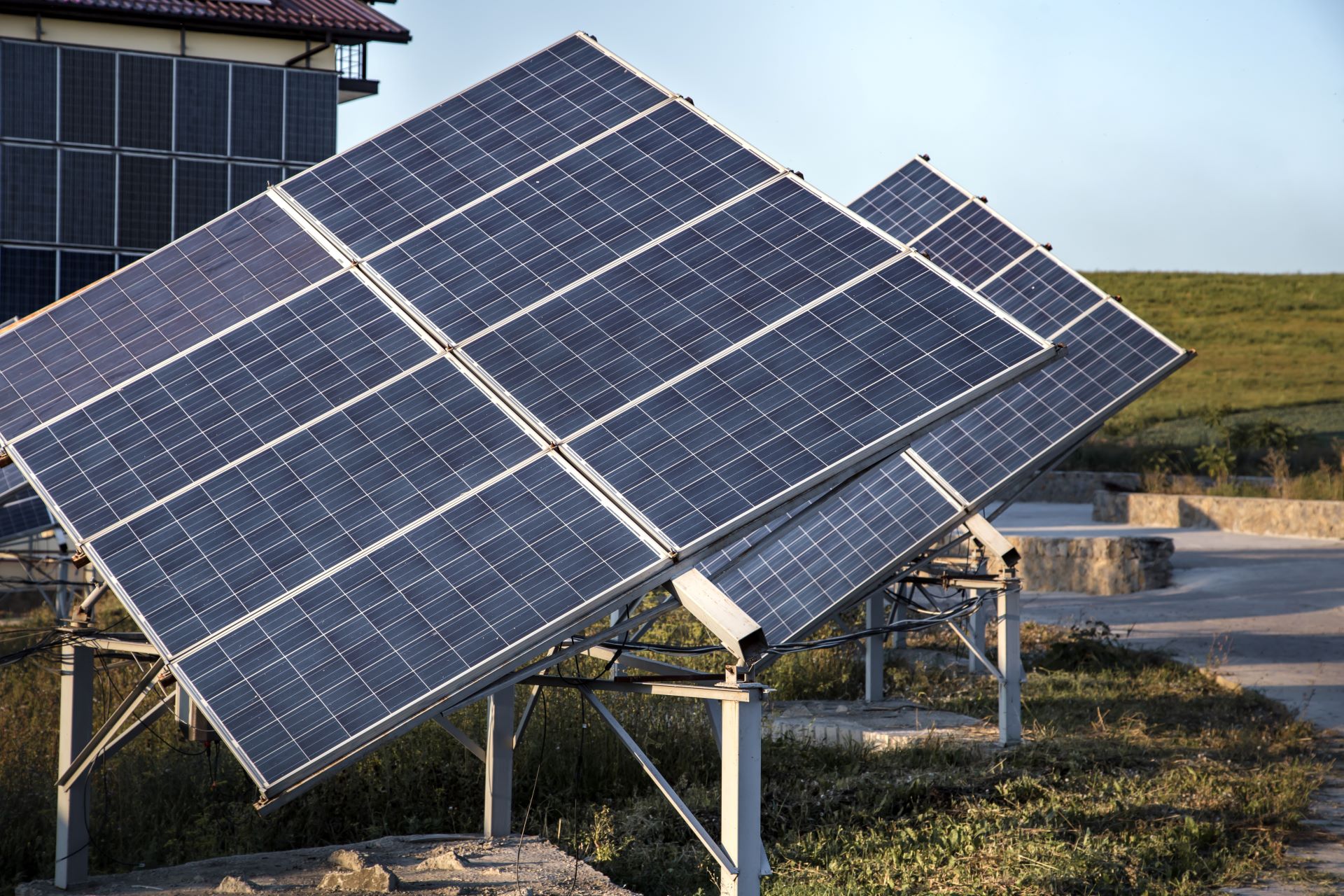
Ground Mounted Solar Panel Systems
Ground-mounted solar systems are often used when roof space is limited or when larger solar arrays are required. Farms, rural homes and industrial properties frequently rely on these installations.
Ground-mounted systems consist of steel or aluminium support structures anchored into the soil using concrete foundations or driven piles. Solar panels are attached to rails mounted on these structures.
One advantage of ground-mounted systems is flexibility in panel orientation. Installers can position panels at the ideal tilt angle and direction without being constrained by roof geometry.
Ground-mounted systems are also easier to maintain because panels are more accessible for cleaning and inspections.
However, these systems require sufficient land area and must be positioned carefully to avoid shading from trees, buildings or terrain features.
Fixed Tilt Ground Mount Systems
Fixed tilt systems are the most common type of ground-mounted solar installation. Panels are mounted on frames set at a fixed angle designed to capture the maximum amount of sunlight throughout the year.
In South Africa, tilt angles typically range between 25 and 35 degrees depending on the region. The goal is to balance energy production between summer and winter months.
The support structures are anchored using concrete footings or steel piles driven into the ground. The depth and spacing of these foundations depend on soil conditions and local wind loads.
Fixed tilt systems are relatively simple and cost-effective compared to more advanced tracking systems. They require minimal maintenance and provide reliable long-term performance.
Adjustable and Tracking Mount Systems
Some large solar installations use adjustable or tracking mounts that allow panels to follow the sun’s movement throughout the day.
Single-axis tracking systems rotate panels from east to west, increasing energy production compared to fixed tilt systems. Dual-axis trackers can also adjust the tilt angle, further improving efficiency.
While these systems are more common in utility-scale solar farms, they occasionally appear in large commercial or agricultural installations.
Tracking systems require more complex mechanical components and regular maintenance. Motors, sensors and control systems must operate reliably to ensure consistent performance.
In residential settings, the additional cost and complexity often outweigh the energy gains, which is why fixed systems remain more common.
Structural Engineering Considerations
Every solar mounting system must be designed with structural engineering principles in mind. Installers must assess the strength of roofs, soil conditions and local wind loads before installing panels.
South Africa’s building regulations require that solar installations comply with structural safety standards. Engineers may need to verify that roof structures can support the additional weight of panels and mounting hardware.
Ground-mounted systems require soil testing to determine the appropriate foundation design. Loose or sandy soils may require deeper foundations or additional reinforcement.
Wind loading calculations are especially important in coastal regions where storms can generate strong uplift forces. Properly engineered mounting systems ensure panels remain secure even during extreme weather.
Corrosion Protection and Material Selection
Solar mounting systems must withstand decades of exposure to the elements. Materials used in these systems are therefore selected for durability and corrosion resistance.
Aluminium is commonly used for mounting rails and brackets because it is lightweight, strong and resistant to rust. Stainless steel fasteners are often used to prevent corrosion at connection points.
In coastal regions such as the Western Cape and KwaZulu-Natal, salt air can accelerate corrosion. Installers must choose materials and coatings designed to withstand these conditions.
Galvanised steel is often used for ground-mounted structures because it provides excellent strength and long-term corrosion protection.
Selecting the right materials ensures that mounting systems remain structurally sound throughout the lifespan of the solar installation.
Maintenance Requirements for Mounting Systems
Although solar mounting systems require minimal maintenance, periodic inspections are essential to ensure long-term performance.
Installers typically recommend inspecting mounting hardware at least once a year. These inspections check for loose bolts, corrosion and structural movement.
Roof-mounted systems should also be checked for signs of water leaks around mounting points. Early detection allows for quick repairs before significant damage occurs.
Ground-mounted systems require inspection of foundations and structural components to ensure they remain stable over time.
Routine maintenance helps extend the lifespan of the solar installation and ensures that mounting systems continue to support panels safely.
Solar panel mounting systems are often overlooked compared to the panels themselves, yet they play a critical role in ensuring the safety, durability and efficiency of solar installations.
In South Africa’s rapidly growing solar market, proper mounting design and installation are essential for protecting both solar equipment and the buildings that support it.
Roof-mounted systems provide a practical solution for urban properties, while ground-mounted installations offer flexibility for larger arrays in rural and commercial settings. Each system type comes with its own installation requirements, structural considerations and maintenance needs.
By understanding how mounting systems work and why they matter, property owners can make more informed decisions when investing in solar energy. When installed correctly using durable materials and sound engineering practices, these systems can support solar panels reliably for decades.