
Why Regular Solar System Maintenance Is Essential in South
Africa
Solar Systems Need Ongoing Care
Solar power systems are a long-term investment, but like any electrical infrastructure, they require routine maintenance to perform optimally. In South Africa, environmental factors such as dust, high temperatures, seasonal storms, and frequent load shedding place additional strain on solar equipment.
What Happens Without Maintenance?
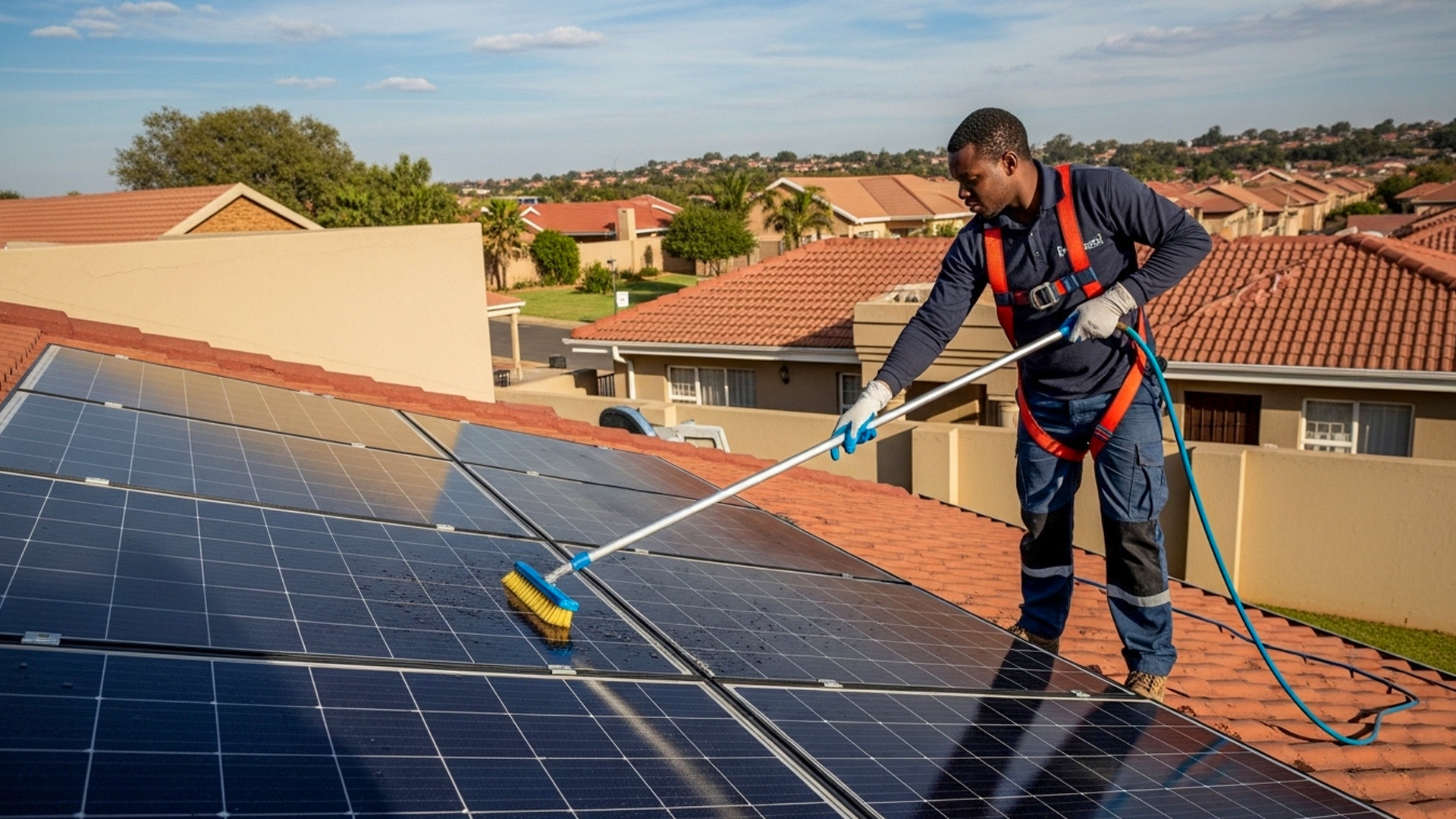
Without regular inspections and servicing, solar systems can suffer from reduced output, overheating components, inverter faults, and premature battery degradation. Even something as simple as dust build-up on panels can reduce energy production by up to 15–25% over time.
Key Maintenance Areas
Solar Panels
Panels should be inspected and cleaned periodically to remove dust, bird droppings, and debris. This ensures maximum sunlight absorption and consistent energy generation.
Inverters
The inverter is the heart of the system. Firmware updates, cooling checks, and fault log reviews help prevent unexpected shutdowns and costly failures.
Batteries
Lithium batteries require performance checks to ensure correct charging cycles, temperature control, and long-term health.
Electrical Safety
Loose connections, surge damage, or aging components can pose safety risks. Routine inspections help ensure continued compliance with electrical standards.
How Often Should Maintenance Be Done?
For most residential systems, a full inspection once a year is recommended. Commercial systems or high-usage installations may require more frequent servicing.
The Long-Term Benefit
Regular solar maintenance extends system lifespan, protects warranties, improves energy yield, and prevents small issues from becoming expensive repairs.
A well-maintained solar system delivers reliable power, better savings, and long-term peace of mind.